
Responsible communication begins long before a message is published. It starts when sustainability is managed through a structured approach, supported by verifiable evidence, and integrated into a process of continuous improvement—aligned with the new transparency requirements that are reshaping how businesses and destinations communicate sustainability.

Sustainability is entering a new era. It is no longer measured solely by the actions an organization takes, but also by its ability to demonstrate those achievements through verifiable information and responsible communication.
In a context shaped by growing demands for transparency and the evolution of the international regulatory landscape, businesses and destinations need to integrate sustainability management into methodologies that help them communicate with greater credibility, provide verifiable information, and continuously improve their performance.
In recent years, businesses and tourism destinations have made significant progress in integrating sustainability into their strategies. However, the evolving international landscape—driven by increasing demands for transparency and regulatory frameworks such as Directive (EU) 2024/825—has introduced a new challenge. It is no longer enough to implement sustainable initiatives. Organizations must also be able to explain them clearly, support them with verifiable evidence, and demonstrate that they are part of a genuine management system.

This shift should not be viewed merely as a response to a new European regulation. It reflects a global trend toward sustainability communication that is more rigorous, transparent, and verifiable. Consumers, travelers, investors, public authorities, and other stakeholders increasingly expect to know not only what an organization is doing, but also how it is doing it, how it measures its progress, and how it can demonstrate its commitments.
In this new landscape, trust no longer depends solely on the message itself. It is built on the quality of the information that supports it. This is precisely where Biosphere provides distinctive value.
More than a recognition program, Biosphere offers a methodology developed by the Responsible Tourism Institute (RTI) that helps businesses, destinations, and institutions manage sustainability through a structured approach, plan initiatives, document supporting evidence, evaluate results, and communicate progress with greater clarity and credibility. In doing so, it helps organizations integrate sustainability into their day-to-day operations, linking their initiatives to the United Nations Sustainable Development Goals (SDGs) while supporting a continuous improvement process.
As a result, sustainability is no longer presented as a collection of isolated initiatives. Instead, it is managed as a structured, measurable, and verifiable process with a greater capacity to build trust among customers, visitors, investors, public authorities, and society as a whole.

The evolution of the European regulatory framework is one of the primary drivers of this shift—but it is not the only one.
In recent years, the demand for clear sustainability information has increased significantly. Society increasingly expects organizations to explain their commitments with greater precision, avoiding broad or generic claims and providing evidence that helps people understand the true scope of their actions.
In this context, Directive (EU) 2024/825 reinforces the need for environmental claims directed at consumers to be clear, specific, reliable, and easy to understand. The objective is not to communicate less about sustainability, but to communicate it more effectively—through messages that are more precise, supported by verifiable evidence, and consistent with the reality of each organization.
However, this transformation extends well beyond Europe. Markets around the world are moving toward models in which transparency, traceability, and accountability play an increasingly important role in building trust. Organizations that adopt a structured approach to sustainability management will be better positioned to meet these expectations, provided their communications are supported by information that is clear, relevant, reliable, and verifiable.
In this new landscape, Biosphere is particularly valuable because it begins with management rather than communication. Its methodology enables organizations to organize sustainability plans, document initiatives, collect supporting evidence, link each initiative to the United Nations Sustainable Development Goals (SDGs), and maintain an ongoing process of monitoring and continuous improvement. As a result, sustainability communications are no longer based solely on statements of intent but are grounded in verifiable and traceable information.

Responsible communication is the result of good management. In fact, when sustainability is integrated into an organization's strategy, it becomes much easier to communicate progress, demonstrate commitments, and keep the information provided to customers, travelers, and other stakeholders accurate and up to date.
By contrast, when sustainability is managed in a fragmented way—without a common methodology or with information scattered across different departments—it becomes much more difficult to substantiate public claims and maintain consistent communications across all channels.
Biosphere addresses this need by providing a framework that helps organizations structure information, centralize supporting evidence, and make continuous improvement an ongoing process. It enables each business or destination to define objectives, plan initiatives, document results, and regularly evaluate its progress, strengthening sustainability governance while providing a solid foundation for transparent communication.
This approach not only helps organizations respond to evolving regulatory and societal expectations, but also enhances their ability to make informed decisions, identify opportunities for improvement, and strengthen the trust of the customers, travelers, and stakeholders they serve.

When sustainability is integrated into an organization's day-to-day operations, communicating it is no longer a complex task—it becomes the natural outcome of a well-structured management approach.
One of the main challenges many businesses and destinations face today is not the lack of sustainable initiatives, but the difficulty of organizing the information they generate, demonstrating the progress they have made, and keeping the evidence supporting their commitments up to date.
Sustainability-related actions are often carried out across different departments, documented through different procedures, or dispersed among reports, sustainability reports, certifications, and internal records. This fragmentation makes it difficult to maintain a comprehensive view of sustainability efforts and complicates the development of consistent communications, particularly as customers, public authorities, investors, and other stakeholders increasingly demand more information.
The Biosphere methodology addresses this challenge by providing a management system that integrates sustainability into an organization's day-to-day operations. Beyond recognizing an organization's commitment, it facilitates the planning, monitoring, and evaluation of sustainability initiatives, providing a solid foundation for communicating with greater transparency and credibility.
Each organization can define its objectives, plan initiatives, document supporting evidence, monitor its progress, and periodically review the results it has achieved. All of this takes place within a structured process of continuous improvement that supports more effective management and communications based on verifiable evidence.

One of Biosphere's greatest strengths is its ability to connect two areas that, for many years, have often evolved separately within organizations.
When these two processes are managed independently, inconsistencies often arise between the actions an organization actually takes and the messages it communicates to the public.
The Biosphere methodology helps reduce this risk by making management the primary foundation of sustainability communication. The evidence that is documented, the objectives that are established, the actions that are implemented, and the performance indicators that are measured become the basis for developing communications that are more accurate, comprehensive, and transparent.
This approach provides a particularly important advantage in today's environment. Sustainability communication no longer depends solely on individual campaigns or isolated initiatives. Instead, it is grounded in information that is generated and maintained as part of the organization's own management system.
As a result, sustainability can be communicated more consistently across every channel—from the organization's website and corporate reports to sustainability reports, social media, and materials developed for customers and visitors.
Sustainability is often associated solely with earning a certification or an external recognition. However, the true value of certification lies in the process it helps organizations develop before, during, and after it is achieved.
In this regard, Biosphere promotes an approach based on continuous improvement. Certification itself is not the end of the journey; rather, it serves as evidence of the process an organization has followed to adopt a methodology that enables it to continue improving over time.
This approach allows sustainability to evolve alongside the organization, adapting to new challenges, incorporating new initiatives, and, in the case of Biosphere, progressively strengthening its alignment with the United Nations Sustainable Development Goals (SDGs).
The periodic renewal of certification, following the successful completion of independent audit processes, also helps keep this continuous improvement cycle active and reinforces the integration of the organization's sustainability commitments into its day-to-day management.
One of the greatest benefits of working with a structured methodology like Biosphere is its ability to transform large volumes of information into valuable insights for both management and communication.
Before implementing a sustainability management system, it is common for information to be scattered across different departments, documents, or platforms.
Once the system is in place, that information can be organized, linked to specific objectives, and transformed into a continuous source of verifiable evidence.
|
Before |
With Biosphere |
|
Isolated initiatives |
Integrated sustainability strategy |
|
Scattered information |
Centralized and structured management |
|
Evidence that is difficult to locate |
Organized and verifiable evidence |
|
Communication based on statements |
Communication based on results |
|
Occasional monitoring |
Continuous improvement and regular evaluation |
|
Poorly connected information |
Actions aligned with the SDGs |
|
Reactive responses |
Planning and proactive management |
This transformation enables organizations to move beyond generic messaging and communicate through data, evidence, and actions that can be explained with greater clarity.
As a result, organizations improve their ability to respond to information requests, prepare reports, support audit processes, and communicate their progress to customers, visitors, investors, and other stakeholders.
Although Biosphere has strong roots in the tourism sector, its methodology is equally applicable to organizations in other industries that want to integrate sustainability into their operations and implement a system that supports planning, monitoring, documentation of supporting evidence, and continuous improvement.
Today, industrial, commercial, technology, cultural, agrifood, and service companies all face a common challenge. They need to demonstrate that sustainability is an integral part of their strategy and that their commitments are reflected in concrete, measurable, and verifiable actions.
Implementing Biosphere's structured methodology enables organizations to meet this need more effectively by improving coordination across departments, streamlining the collection of supporting evidence, and facilitating communications that accurately reflect the organization's operations.
As a result, sustainability is no longer perceived as a collection of isolated initiatives. Instead, it becomes a cross-functional element that supports decision-making, day-to-day management, and relationships with all stakeholders.

Although the specific needs of a business and a tourism destination may differ, they now share a common challenge.
They need to manage sustainability in a structured way, maintain reliable information about their progress, and communicate those results transparently to a society that increasingly expects greater clarity and rigor.
In this context, having a common methodology offers numerous advantages.
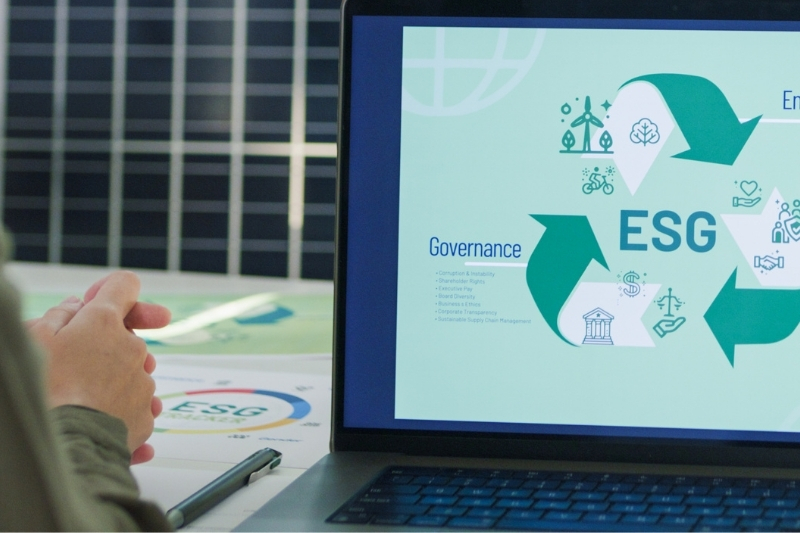
The Biosphere methodology delivers precisely this integrated approach, enabling both businesses and destinations to work with a common language, a shared planning framework, and the same model of continuous improvement, aligned with the United Nations Sustainable Development Goals (SDGs) and Environmental, Social, and Governance (ESG) criteria.
In this way, sustainability no longer depends solely on individual initiatives. Instead, it becomes a collective effort aimed at generating positive contributions for destinations, communities, and economic development—provided that this progress can be demonstrated with verifiable evidence and communicated within the scope of what has actually been achieved.

One of the key lessons emerging from the evolution of the international regulatory landscape is that sustainability communication can no longer be developed solely by the marketing or communications department.
Transparency begins much earlier. It starts when an organization identifies its impacts, defines objectives, establishes concrete actions, documents the initiatives it implements, and regularly evaluates its results.
Only then can sustainability communications be built on a solid foundation and generate the trust that consumers, travelers, investors, and other stakeholders increasingly expect.
In this context, management and communication are no longer separate processes. They become two parts of the same strategy.
The better organized an organization's information is, the easier it becomes to communicate progress, respond to requests for information, prepare for audits, and develop content based on verifiable evidence.
Communication shifts away from promises and toward evidence. And that distinction is becoming increasingly important in a world where transparency is one of every organization's most valuable assets.
Although the new European framework has accelerated this transformation, limiting the discussion solely to regulatory compliance would underestimate the true scope of the changes taking place in sustainability.
Transparency, traceability, and accountability are becoming shared principles embraced by businesses, destinations, and organizations around the world.
Together, these developments are shaping a landscape in which the ability to manage and demonstrate sustainability is no longer just a competitive advantage—it is increasingly becoming a market expectation.
Preparing for this new reality means investing in more effective management, strengthening trust, and improving an organization's ability to adapt in an environment that continues to evolve.

The implementation of Directive (EU) 2024/825 presents an opportunity for businesses and destinations to reassess how they manage and communicate sustainability.
To explore the key practical implications of this new landscape, Biosphere will soon host a specialized webinar covering topics such as:
More information about this upcoming Biosphere webinar will be shared soon. Designed for both businesses and tourism destinations, the session will take a closer look at the challenges, opportunities, and practical tools that can help organizations navigate this new era of sustainability communication with greater clarity, rigor, and confidence.
An invitation to prepare for a new landscape in which communicating sustainability will require greater clarity, stronger supporting evidence, and a management approach that is increasingly aligned with the realities of each organization.
The answer begins with recognizing that sustainability cannot be demonstrated unless it is first managed through a structured approach.
Sustainability communication is evolving toward a model in which transparency, verifiable evidence, and continuous improvement play an increasingly important role. In this new landscape, an organization's sustainability will no longer be defined solely by the actions it takes, but also by its ability to plan, measure, demonstrate, and communicate those achievements with transparency, consistency, and verifiable evidence.
For businesses and destinations alike, trust will become one of their most valuable assets. Having a methodology that integrates sustainability into day-to-day management, organizes information, evaluates progress, and supports every commitment can help organizations respond to evolving regulatory requirements while strengthening relationships with customers, travelers, public authorities, investors, and society as a whole.
More than simply a response to regulatory change, this evolution represents an opportunity to build organizations that are better prepared, more transparent, and more resilient. Because sustainability is no longer just about doing things better—it is also about being able to explain and demonstrate those efforts through information that is clear, relevant, reliable, and verifiable.