
The Pyrenees and the Lands of Lleida have further strengthened their position among destinations advancing responsible tourism management by renewing their Biosphere Gold Destination designation, an international recognition that reflects verified commitments to continuous improvement, destination management, and the United Nations Sustainable Development Goals (SDGs).
This renewal highlights the collective efforts of public authorities, businesses, and local organizations to promote a tourism model focused on protecting the region, strengthening the local economy, and fostering experiences that reflect the destination's unique identity.
This collective approach reflects a fundamental principle: sustainability is not built through isolated actions, but through a strategic vision that integrates environmental stewardship, economic development, and the well-being of local communities.
That sustained commitment has enabled The Pyrenees and the Lands of Lleida to once again renew their Biosphere Gold Destination designation, reinforcing their position as a destination committed to the continuous improvement of sustainable tourism.
The renewal of this international certification, granted after successfully completing the corresponding surveillance audit, confirms that the destination continues to advance in implementing a management model aligned with the United Nations Sustainable Development Goals (SDGs) and the principles of continuous improvement promoted by the Biosphere methodology.
More than a recognition, this designation demonstrates the region's ongoing efforts to integrate sustainability criteria into its tourism development by actively engaging public authorities, businesses, local organizations, and residents in a shared project committed to promoting a tourism model that is more responsible, inclusive, and respectful of the environment.
The renewal of this designation recognizes the work carried out over recent years by the Lleida Provincial Council Tourism Board, which has led a strategy that has positioned sustainability as one of the fundamental pillars of the region's tourism development.
Thanks to this commitment, the destination has established a management model based on planning, continuous improvement, and collaboration among all stakeholders within the tourism ecosystem. This model enables sustainability policies to be integrated into destination management while advancing in a coordinated manner toward shared objectives aligned with the United Nations Sustainable Development Goals (SDGs).
The Biosphere Gold Destination designation is awarded to destinations that, in addition to advancing destination management aligned with sustainability criteria, demonstrate a high level of engagement from the local business community. Its renewal confirms that The Pyrenees and the Lands of Lleida continue to strengthen a community committed to continuous improvement and to a more responsible approach to tourism in response to the challenges facing the sector today.
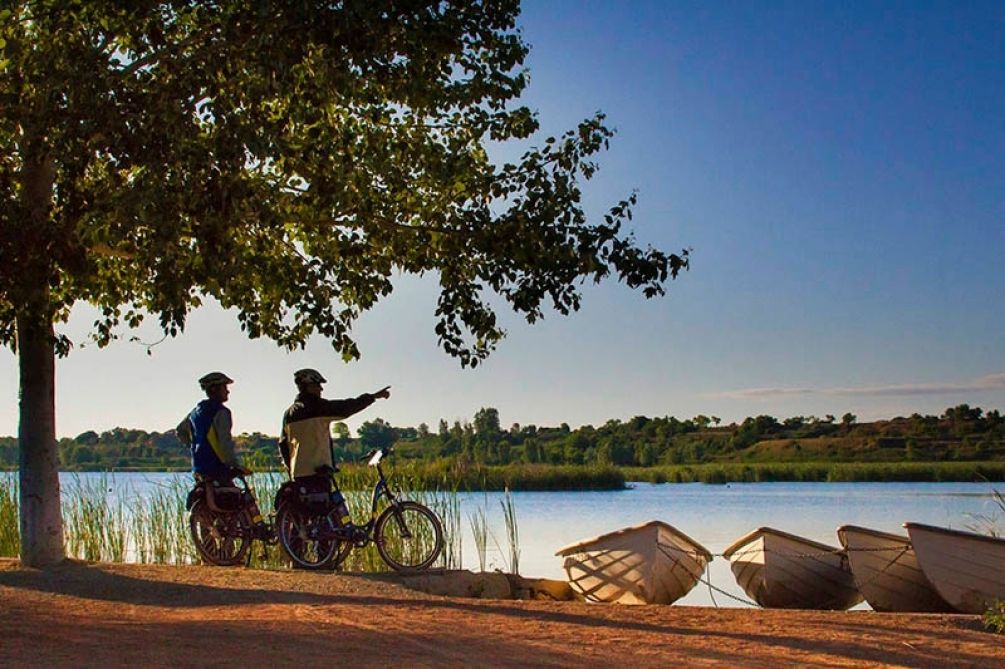
Traveling through The Pyrenees and the Lands of Lleida means discovering a region where nature and cultural heritage coexist in harmony with a tourism model committed to conservation and responsible development.
From breathtaking mountain landscapes and protected natural areas to charming villages with centuries of history, the destination offers experiences that invite visitors to explore the region at a slower, more mindful pace.
Marked hiking trails designed to encourage the respectful use of natural areas, outdoor activities developed according to responsible management principles, accommodations that incorporate sustainable practices, locally sourced gastronomy, and a rich historical and cultural heritage all contribute to a tourism offering that celebrates the authenticity of the region.
This model aims to ensure that tourism also strengthens local economies, preserves traditions, and promotes balanced development that benefits both visitors and the people who call the destination home.
In this way, sustainability ceases to be an abstract concept and becomes a tangible experience that accompanies visitors throughout their journey.
One of the most significant strengths of the model promoted by the destination, is its ability to bring together a wide range of local stakeholders under a shared vision for tourism management.
Public authorities, tourism businesses, local organizations, and other members of the tourism ecosystem work collaboratively to integrate sustainability principles, improve their processes, and advance toward common goals aligned with the United Nations Sustainable Development Goals (SDGs).
Within this framework, the growing participation of businesses and organizations strengthens the region's collaborative network and reinforces the understanding of sustainability as an ongoing process. This commitment is reflected in strategic planning, responsible management, continuous improvement of the tourism offering, and a strong dedication to protecting the region's natural and cultural assets.
The destination's progress depends not only on the policies implemented by public authorities. It is also driven by the daily efforts of hotels, rural accommodations, restaurants, outdoor adventure companies, wineries, museums, visitor information centers, and many other organizations that integrate responsible practices into their day-to-day operations.
Each of these initiatives helps foster a shared culture based on responsibility, quality, and continuous improvement while also making it easier to communicate the region's sustainability progress in a clear and credible way.
For this reason, businesses and organizations throughout the Pyrenees and the Lands of Lleida that have not yet joined this shared effort have an opportunity to further strengthen the measurement, management, and communication of their sustainability commitments and, in doing so, pursue the Biosphere Certified designation as part of a continuous improvement process.
The renewal of the Biosphere Gold Destination designation represents much more than the continuation of an international certification.
It recognizes a model of tourism management built on collaboration, strategic planning, monitoring, and continuous improvement. This approach enables the destination to further integrate sustainability principles into its management, contribute to the protection of its natural and cultural heritage, strengthen the local economy, and enhance the quality of life of the communities connected to the region.
At Biosphere and the Responsible Tourism Institute (RTI), we extend our sincere congratulations to the public authorities, organizations, businesses, and professionals whose daily efforts make it possible for the Pyrenees and the Lands of Lleida to continue advancing as a destination committed to a more responsible, measurable, and SDG-aligned approach to tourism management.
This renewal should not be seen as a final destination, but rather as a renewed commitment to further strengthening a tourism model built on verifiable commitments, regional collaboration, and continuous improvement.