
Within the framework of B-Travel 2026, held at Fira de Barcelona, Biosphere and the Responsible Tourism Institute analyzed the transformation of sustainable tourism in 2026, addressing sustainable finance, new European directives, responsible tourism mobility, and a culture of conscious travel as strategic pillars for companies and destinations.
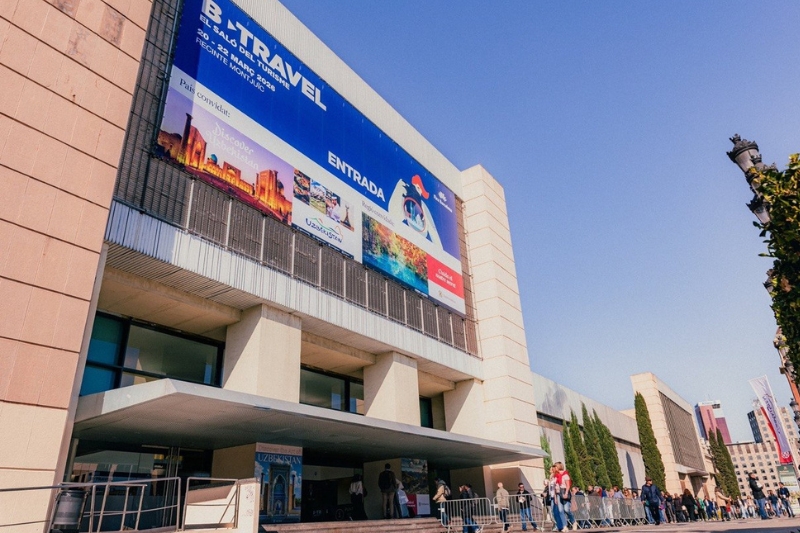
From March 20 to 22, 2026, a new edition of the B-Travel tourism fair took place at the Fira de Barcelona venue, consolidating its position as one of the main events in the sector in Spain. The event was once again a success, both in the professional sphere and in the sessions open to the general public.
As in previous editions, Biosphere and the Responsible Tourism Institute (RTI) actively participated in the fair’s professional program, promoting three sessions focused on the evolution of sustainable tourism in 2026 and the strategic challenges facing the sector. The sessions were very well received and were led by Asier Goikoetxea Zabala, Commercial Manager of Biosphere, who acted as both speaker and moderator.
Throughout the professional session on Friday, March 20, we had the opportunity to address a key question for today’s tourism sector: how sustainable tourism is changing in 2026 and what implications this transformation has for companies and destinations.
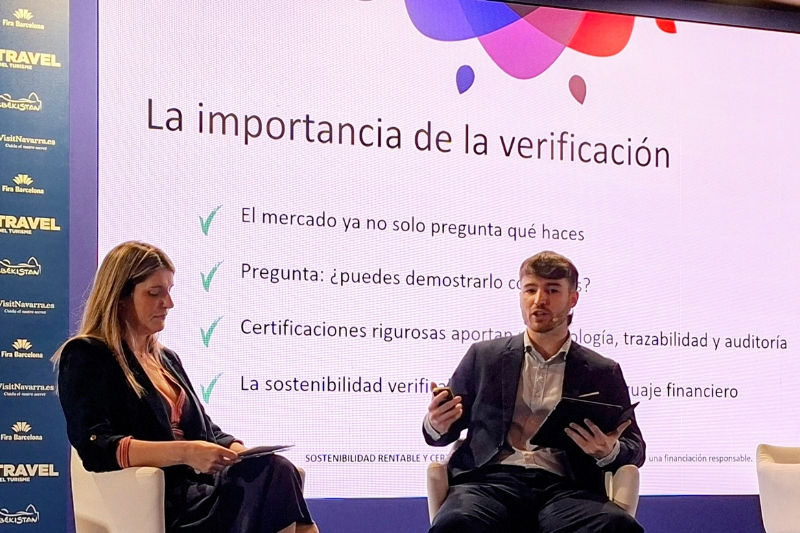
The first session, focused on sustainable finance and the new European regulatory framework, analyzed the impact of European directives on the management, financing, and reporting of tourism companies and destinations.
Under the title Sustainable Finance and New European Directives: Keys for the Tourism Sector, the session addressed the strategic opportunities offered by integrating ESG criteria and sustainability certification in a context where European regulations already influence access to financing and risk assessment.
The session included an interview with Cristina Catalina Llopis de Grua, Head of Sustainable Finance in the hotels and tourism vertical at CaixaBank, and was presented by Asier Goikoetxea Zabala.
During the session, it became clear that the transition toward more sustainable tourism requires understanding the new European regulatory framework and turning it into a competitive advantage for the sector.
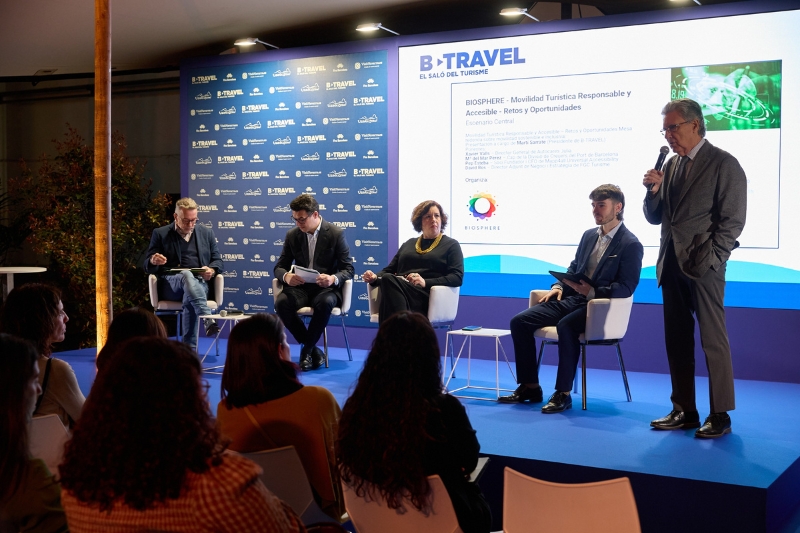
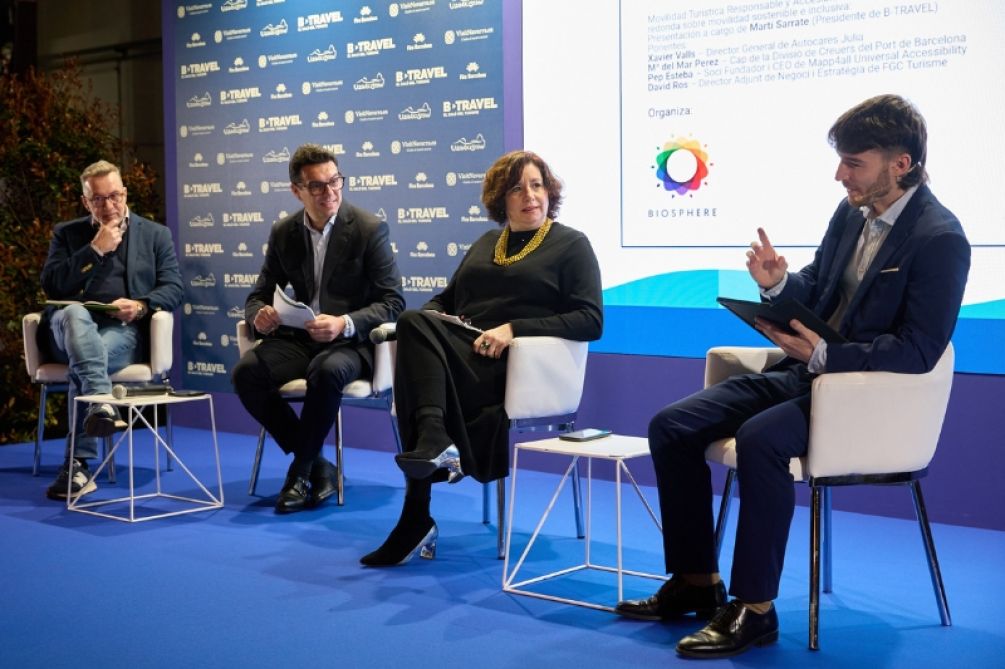
The second session focused on one of the major challenges of sustainable tourism in 2026: responsible and accessible tourism mobility.
Under the title Responsible and Accessible Tourism Mobility: Challenges and Opportunities, a roundtable was held to explore sustainable, inclusive, and low-carbon mobility models aligned with ESG criteria and climate adaptation strategies.
The roundtable was introduced by Martí Sarrate, president of the B-Travel fair, and featured the participation of Xavier Valls, General Manager of Autocares Julia; Mª del Mar Pérez, Head of the Cruise Division at the Port of Barcelona, and David Ros, Deputy Director of Business and Strategy at FGC Turisme. The session was moderated by Asier Goikoetxea.
The discussion highlighted the need to move toward more balanced and resilient destinations, where sustainable mobility is integrated as a structural element of the tourism model.
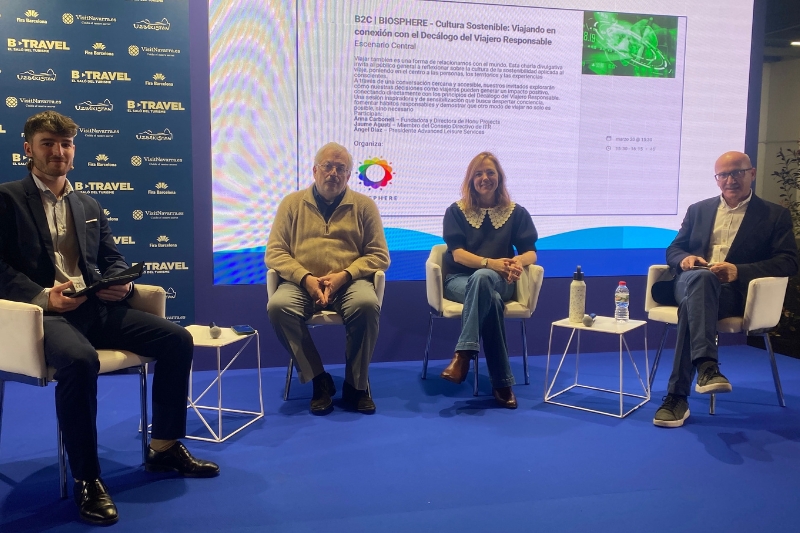
The third session, titled Sustainable Culture: Traveling in Connection with the Responsible Traveler Decalogue, was aimed at the general public and adopted an informative format.
The objective was to reflect on the impact of traveler behavior on destinations and how individual decisions directly influence tourism sustainability. Through an accessible and engaging discussion, the session explored how to promote more conscious tourism from the demand side.
Participants included Anna Carbonell, founder and director of Honu Projects; Jaume Agustí, member of the RTI board of directors; and Ángel Díaz, president of Advanced Leisure Services.
The session invited participants to place people, destinations, and responsible experiences at the center, connecting with the principles of the Responsible Traveler Decalogue as a practical tool to promote more sustainable habits.
The three sessions promoted by Biosphere at B-Travel 2026 were aimed at tourism sector professionals interested in anticipating regulatory changes, integrating sustainability as a competitive advantage, and making decisions based on strategic information.
In a context marked by European regulatory transformation, the integration of ESG criteria, and the growing demand for responsible experiences, sustainable tourism is no longer limited to discourse. It is becoming established as a strategic pillar for destinations and companies seeking resilience, competitiveness, and alignment with the Sustainable Development Goals (SDG).
The participation of Biosphere and the Responsible Tourism Institute (RTI) at B-Travel 2026 reaffirms, once again, their commitment to supporting companies and destinations in this transition toward a more responsible, innovative, and sustainable tourism model.
Photos: B‑Travel