
Sustainable tourism is moving toward a new scenario in which measuring, verifying, and generating positive impact is no longer optional. Biosphere’s participation in the International Forum Turium 2026 highlighted one of the sector’s major challenges: moving from sustainability as a commitment toward a regenerative model capable of transforming companies, destinations, and territories. A vision that reinforces the role of sustainable tourism, ESG criteria, and certification as key tools to promote more transparent, measurable, and future-oriented management.
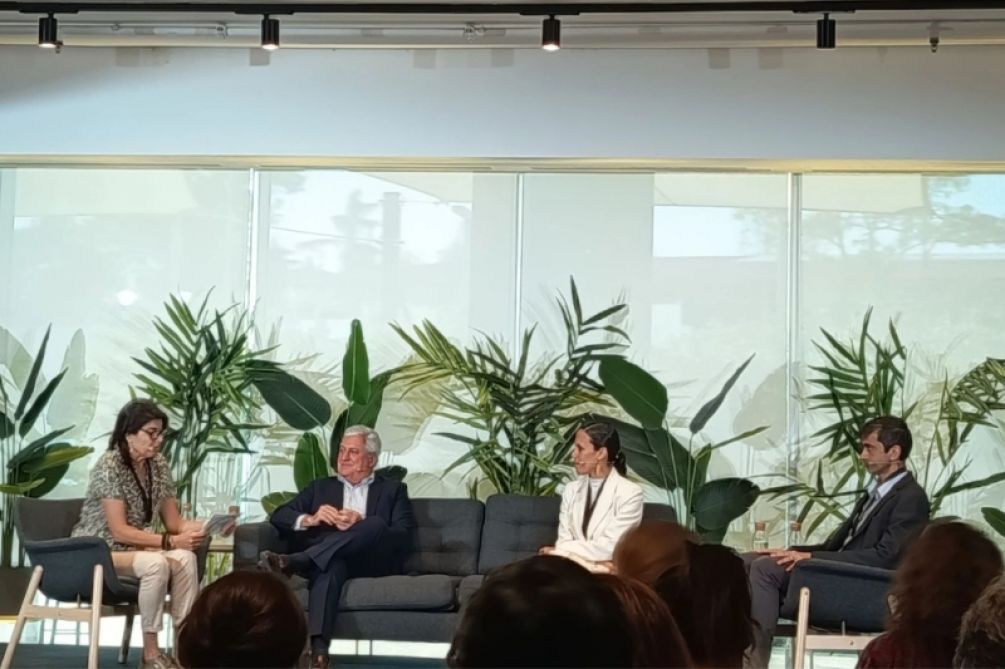
Tourism is experiencing a decisive moment. It is no longer enough to grow, attract visitors, or generate economic activity. The real challenge lies in understanding what value tourism creates, for whom it creates it, and what effects it leaves on territories, local communities, businesses, and the planet. This reflection was strongly present at the sixth edition of the International Forum Turium 2026, held on June 23 in Madrid under the theme “Ethical tourism, the virtuous circle.”
The event brought together leading figures from the tourism, institutional, business, cultural, and technological sectors to reflect on how to move toward a more conscious, responsible model capable of generating shared prosperity. In this context, Biosphere Sustainable participated in the roundtable “From sustainable to regenerative tourism,” a space dedicated to analyzing how the sector can go beyond reducing impacts and actively contribute to improving destinations.
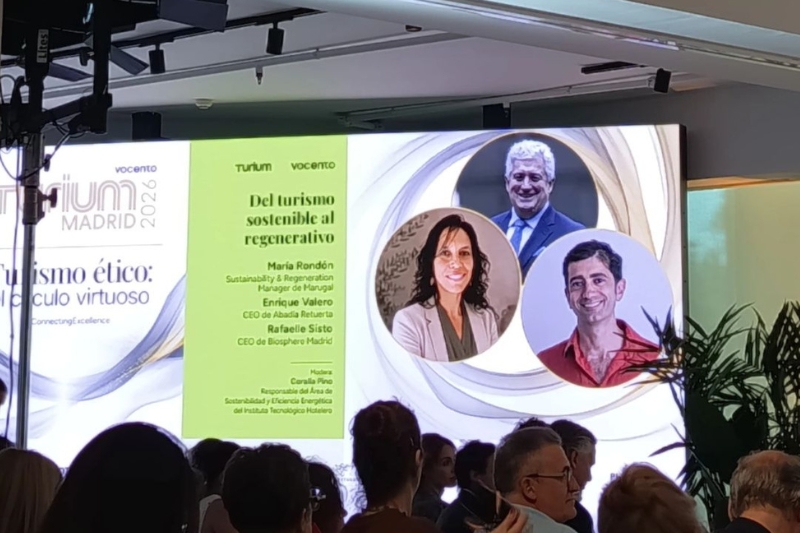
The session “From sustainable to regenerative tourism” was part of the block dedicated to the planet and featured the participation of María Rondón, Sustainability & Regeneration Manager at Marugal; Raffaele Sisto, CEO of Biosphere Sustainable Madrid; and Enrique Valero, CEO of Abadía Retuerta. The session was moderated by Coralía Pino, Head of the Sustainability and Energy Efficiency Area at the Instituto Tecnológico Hotelero (ITH).
From different perspectives, the participants shared a common concern: how to build tourism capable of leaving a positive footprint. The discussion addressed the shift from an approach focused on minimizing impacts to a more ambitious one aimed at regenerating, strengthening, and delivering real value to the territory.
For Biosphere, this transition implies a profound change in the way sustainability is understood. It is not only about incorporating good practices or communicating commitments, but about integrating sustainability into strategy, management, and decision-making. Only in this way is it possible to move toward tourism models that generate environmental, social, cultural, and economic benefits in a balanced way.

One of the central messages of Raffaele Sisto’s intervention was the need to bring sustainability down to earth. In tourism, “talking about sustainability in the abstract is no longer enough. It is necessary to measure it better, understand the impact of each action, and demonstrate with evidence how a tourism strategy contributes to the well-being of the territory and its people.”
This vision is directly connected to the work that Biosphere carries out with destinations, companies, and organizations across different sectors. Through its online sustainability management platform, the Biosphere methodology makes it possible to organize actions, collect evidence, monitor progress, and build continuous improvement plans aligned with the United Nations Sustainable Development Goals (SDGs) and ESG criteria—environmental, social, and governance.
In a context marked by increasing demands for transparency, both from markets and from new regulatory frameworks, especially in Europe, having rigorous management and verification systems is becoming increasingly necessary. Sustainable tourism must be clearly, comparably, and verifiably demonstrated, avoiding ambiguous claims and strengthening the trust of travelers, public administrations, operators, and society.
Measuring does not mean reducing sustainability to isolated data. It means providing the sector with a solid foundation for making more responsible decisions, identifying progress, detecting opportunities for improvement, engaging teams, aligning objectives, and communicating results transparently. Ultimately, it means building trust.

The theme of the International Forum Turium 2026, “Ethical tourism, the virtuous circle,” clearly summarizes the challenge facing the sector. Tourism must generate prosperity, but it must also care for the places that make it possible. It must contribute to the competitiveness of destinations, but without disconnecting from the quality of life of their residents. It must drive innovation, but also preserve identity, culture, and natural resources.
During the forum, different voices emphasized the importance of moving beyond a vision of success based solely on the number of arrivals. The shared reflection pointed toward tourism capable of creating prosperity in a responsible, balanced, and lasting way. A tourism model that understands its role within a broader ecosystem, where public administrations, companies, workers, residents, and travelers are part of the same value chain.
In this sense, ethics ceases to be a complementary concept and becomes a management criterion. Incorporating ethics into tourism implies asking not only how much growth occurs, but how it occurs; not only what benefits are obtained, but how they are distributed; not only what experience the visitor has, but what legacy remains in the destination.
Biosphere’s participation in Turium 2026 reinforced an idea that is essential for us: sustainability must be understandable, applicable, and verifiable.
For this reason, in order to move toward regenerative tourism, destinations and companies must be able to identify their starting point, define realistic objectives, activate improvement plans, and rigorously evaluate their results.
The Biosphere approach is based precisely on supporting this evolution.
Developed with the methodological endorsement of the Instituto de Turismo Responsable (RTI), Biosphere helps translate major global commitments into concrete actions adapted to the reality of each organization and territory, through a continuous improvement system aligned with the United Nations Sustainable Development Goals and ESG (Environmental, Social, and Governance) criteria.
This work is materialized in distinctions such as Biosphere Certified, aimed at companies and entities that advance in the verified management of their sustainability, and Biosphere Certified Destination, focused on destinations that seek to structure, measure, and communicate their progress from a territorial perspective. Both recognitions connect sustainability strategy with daily management, stakeholder participation, and accountability.
This approach is especially relevant in a context in which sustainable tourism requires rigor, transparency, and continuous improvement. Regeneration cannot be framed as an aspirational label, but as a process that requires data, governance, participation, and long-term commitment.
The international dimension of this commitment is further strengthened by Biosphere’s participation as a founding member of the Tourism Sustainability Certifications Alliance (TSCA), an international alliance that brings together leading sustainability certifications in tourism to promote greater coherence, credibility, and recognition within the sector.

Biosphere’s presence at the International Forum Turium 2026 made it possible to share a clear vision of the future of tourism. A vision based on understanding that the sector itself must move toward models that not only reduce negative environmental impacts but are also capable of generating positive and measurable value for destinations and their communities.
Regenerative tourism invites us to look beyond compensation or mitigation. It proposes a deeper relationship with territories, based on listening, shared responsibility, and the creation of shared benefits. It involves understanding that every tourism decision has consequences and that every strategy can contribute to improving—or deteriorating—the balance of a destination.
Following the forum, the message is particularly relevant. The future of tourism will not depend solely on its ability to attract visitors, but on its ability to generate well-being, strengthen communities, protect resources, and create lasting prosperity. To achieve this, sustainability must cease to be a promise and become a measurable, shared, verifiable practice aligned with the new frameworks of responsibility that are already redefining the sector’s competitiveness.
And as we have been doing for more than 25 years, at Biosphere we will continue working to support destinations, companies, and organizations along this path. Because the tourism of the future must not only be more sustainable: it must be capable of regenerating, inspiring, and demonstrating, through actions, that another way of traveling, managing, and inhabiting territories is possible.