
Rethinking tourism also means rethinking how we want to travel, how destinations relate to those who live in them, and what impact we want to generate in the territory.

From this perspective, a necessary reflection emerges on the challenges and opportunities that will shape the evolution of the sector toward more sustainable, balanced, and people- and destination-oriented models.
On May 28, Biosphere had the opportunity to participate in the meeting “Tourism: Rethinking Travel” a professional event organized by the newspaper El Mundo and the Valencian Community, which created a space for reflection and debate on the need to rethink the way we travel and, ultimately, the current tourism model.
The meeting took place at a decisive moment for the sector. In a context in which the tourism industry is not only seeking to address the challenges arising from the international geopolitical and economic scenario, but also to move toward a profound transformation, sustainability is consolidating itself as one of the main drivers of change.
During these sessions, held in Madrid—a city that is no stranger to this debate—we had the opportunity to analyze, based on the experience and knowledge of the participating professionals, how the tourism sector is evolving toward more conscious, responsible models that are better connected to the territory.
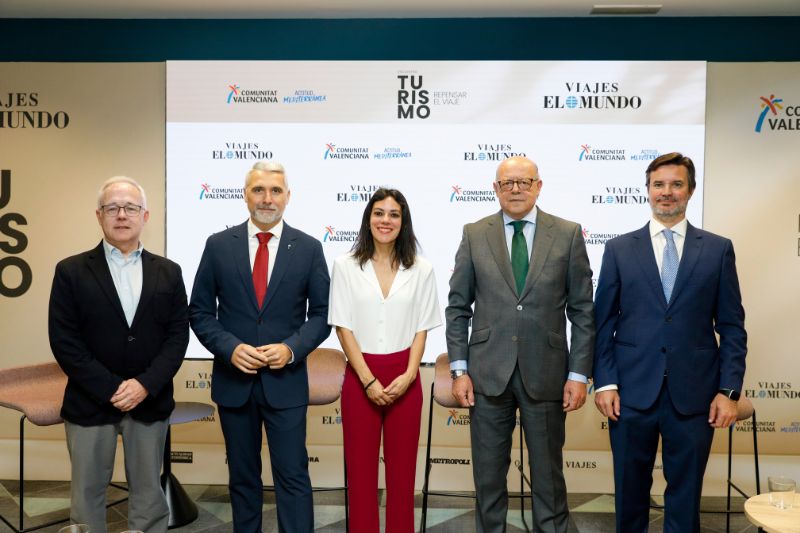
One of the sessions, focused on mobility, sustainability, and purpose, highlighted a particularly relevant issue: the need to reassess certain tourism patterns and move toward a more balanced and sustainable model.
In this context, José Manuel Camarero, Regional Secretary for tourism of the Department of Industry, Tourism, Innovation, and Trade of the Generalitat Valenciana, stated that “the sector has historically maintained a close relationship with sustainability, precisely because its viability depends on caring for the territory”, also emphasizing “the importance of making visible the positive impact it can generate in destinations such as Benidorm”.
Indeed, Benidorm—recently incorporated into the international network of sustainable destinations Biosphere—has been recognized with the Biosphere Certified Destination distinction, which certifies the proper implementation of sustainable practices and compliance with established commitments.
At the same session, Santiago Vallejo, Vice President and Head of institutional relations of the Spanish Tourism Board, warned about one of the main imbalances of the current model, pointing out “the strong concentration of visitors in a limited number of autonomous communities”.
In response, he advocated for “seasonality management as an essential lever to relieve pressure on destinations, better distribute the benefits of tourism, and move toward a more sustainable activity over time”.

From the hotel sector, César Pérez Araque, Director of quality and sustainability at Vincci Hotels, placed sustainability at the center of the tourism debate.
In this regard, he stated that “sustainability is no longer an added value, but a social, business, and regulatory requirement for any company that wants to remain competitive”.
Pérez Araque also highlighted one of the most sensitive issues in urban tourism: the growth of unregulated tourist accommodations and its impact on access to housing.
According to him, “it is not possible to speak of sustainable tourism if the model ends up pushing out of cities those who live and work in them”.
From Biosphere, we would like to emphasize that Vincci Hotels’ position goes beyond discourse. Its commitment to sustainability is reflected in the Biosphere community, where two of its establishments—Vincci Selección La Plantación del Sur in Tenerife and Hotel Vincci Mae in Barcelona—hold the Biosphere Certified distinction.
This certification recognizes the effective implementation of sustainable practices and compliance with verifiable commitments in sustainability.
It should also be noted that both establishments are located in destinations that have demonstrated a strong commitment to sustainable tourism. Tenerife holds the Biosphere Certified Destination distinction, while Barcelona has been recognized as a Biosphere Certified Platinum Destination, a distinction that highlights collaboration between the public administration and the private sector to advance toward more responsible, measurable tourism models aligned with the real needs of the territory.

The meeting also included the participation of Patricio Azcárate Díaz de Losada, secretary general of the Responsible Tourism Institute (RTI) and CEO of Biosphere, whose intervention encouraged attendees to reflect on the new phase cities are experiencing, where “culture and gastronomy are consolidating as key elements to build authentic tourism offerings capable of connecting with neighborhoods, the territory, and experiences beyond conventional routes”.
Another session focused the debate on the resurgence of urban tourism and the ability of cities to reinvent their cultural and gastronomic offerings as an essential part of their appeal.
On this issue, María Ritter, director of the Repsol Guide, argued that “gastronomy attracts higher-spending travelers, but it must also act as a guardian of the territory to prevent mass tourism from diluting the identity of destinations”.
For her part, Paz Aparicio, director of Movistar Arena, highlighted live music and culture as tourism drivers and advocated for “a diverse and accessible cultural offering, far from both overcrowding and elitist tourism models”.
Similarly, chef Ramón Freixa, awarded two Michelin stars and three Repsol Suns, agreed that “gastronomy has become a primary reason for travel” and emphasized that, in the face of increasingly informed and demanding consumers, “authenticity and quality are key to differentiating destinations, hotels, and experiences”.
Examples of this include his restaurants Atelier and Tradición, both located on Velázquez Street in Madrid; Papagena, located on the sixth floor of the Teatro Real; and Erre de Ramón Freixa, on the tenth floor of the Las Américas Resort Torre del Mar hotel in Cartagena de Indias, Colombia.
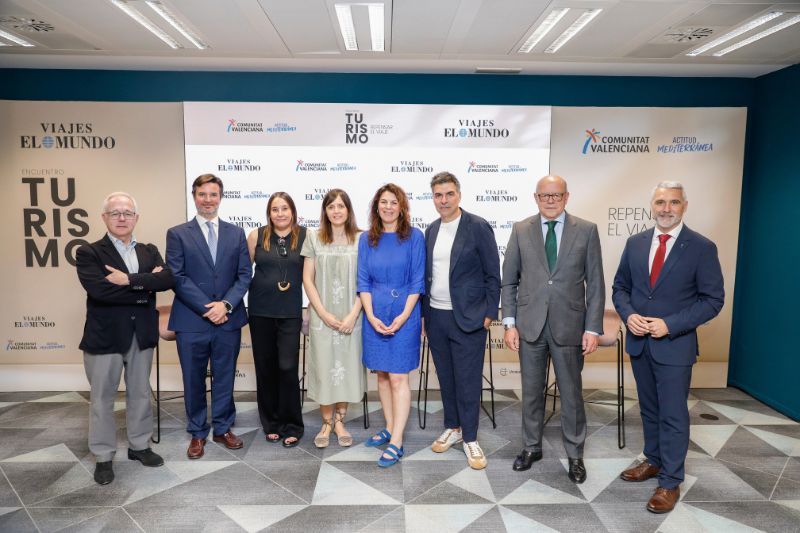
In this context, Patricio Azcárate stated that “sustainable tourism must be understood as a tool capable of generating real benefits for destinations, especially when it contributes to improving the quality of life of the people who live in them”.
He also highlighted “the consolidation of a new traveler profile, more interested in meaningful experiences that can add value to the territory”.
Regarding artificial intelligence, he noted that “its advancement will transform many professions, although it will hardly replace what arises from human interaction, the authenticity of a place, and the direct experience of a destination”.

Throughout the event, it became clear that Spain can no longer measure tourism success solely by the number of arrivals.
The real challenge lies in better managing tourist flows, relieving pressure on the most strained destinations, and moving toward a model capable of distributing benefits more fairly, protecting the territory, and improving the quality of life of those who live there.
The future of tourism is not about growing more at any cost, but about growing better.
What became clear at the end of these sessions is that, in the current international context, meetings like this are essential to understanding the path the tourism industry must follow.
From the perspective of the different stakeholders involved—operators, establishments, destinations, and travelers—these spaces allow for reflection, positioning, and action to ensure the future of the sector in a more balanced, sustainable way aligned with the real needs of the territories.
For Biosphere, this participation represented an excellent opportunity to highlight sustainability as the guiding axis of any action aimed at planning the tourism industry of the future.
It also made it possible to show how, through the Biosphere Certified distinction for companies and Biosphere Certified Destination for destinations, sustainability ceases to be a mere declaration of intent and becomes action, through a continuous process based on methodology, data, verification, and constant improvement.
This approach is aligned with the United Nations Sustainable Development Goals (SDGs), ESG criteria (environmental, social, and governance), and the growing regulatory demands promoted by European institutions, placing sustainability at the center of management and decision-making.
In this regard, Biosphere thanks the event organizers and all attendees for the opportunity to participate in a space for reflection that contributes to enriching the debate on the present and future of tourism. It also values the interest and receptiveness shown toward a vision of sustainability based on action, measurement, and continuous improvement.
Because advancing toward more balanced, competitive, and resilient tourism requires understanding sustainability not as a complement, but as one of the pillars on which to build tourism development in the coming decades.
Looking toward the future of tourism means understanding that major changes are not built solely on intention, but on the ability to act in a coordinated way, measure progress, build partnerships, and maintain a real commitment to territories and the people who inhabit them.
Along this path, sustainability is consolidating itself as an opportunity to transform the sector through responsibility, but also through innovation, cooperation, and the belief that it is possible to continue traveling, discovering, and generating value in a more conscious, balanced, and positive way for all.
This final idea connects directly with one of the main conclusions of the meeting. The future of tourism will not depend solely on the ability to attract visitors, but on the ability to generate well-being, protect the identity of destinations, and create experiences that add value both for those who travel and for those who live in them. A transformation in which sustainability ceases to be an aspiration and becomes a real tool for management and shared progress.
Photos from the sessions: El Mundo