
Sustainable tourism is evolving toward models capable of generating a positive impact on destinations. This article analyzes how regenerative tourism, the role of the responsible traveler, and the actions of institutions and companies can drive more resilient, competitive, and sustainable destinations aligned with the SDGs, ESG (Environmental, Social, and Governance) criteria, and management frameworks such as Biosphere, promoted by the Responsible Tourism Institute (ITR).

Talking about sustainable tourism today means going beyond impact reduction. For years, the sector has advanced in essential areas such as energy efficiency, waste management, and the responsible use of resources. However, the current context requires a broader and more transformative vision; one in which tourism activity not only minimizes its negative effects but also actively contributes to the environmental, social, cultural, and economic well-being of destinations. This is precisely the direction in which sustainable destinations and tourism models most committed to sustainability are moving, toward a real balance between the visitor experience, the competitiveness of the destination, and the quality of life of local communities. In this context, concepts such as regenerative tourism, positive impact, and responsible management are gaining importance within the conversation about the future of tourism.

Tourism sustainability can no longer be understood solely in environmental terms, although that dimension remains essential. A sustainable destination is one that is capable of managing its resources in a balanced way, protecting its identity, strengthening its economic fabric, and fostering a more harmonious relationship between visitors and residents. This involves looking beyond isolated indicators and moving toward comprehensive strategies that incorporate the social dimension, the enhancement of cultural heritage, support for the local economy, and territorial governance. In this sense, sustainable tourism ceases to be a set of isolated measures and becomes a framework for management and continuous improvement, aimed at generating shared value, resilience, and long-term competitiveness.
In this context, tools such as the Biosphere online sustainability management platform help organize this process, enabling destinations and companies to move from initial diagnosis to action plans, indicators, and verifiable improvements.
Adopting this broader vision means recognizing that tourism sustainability is not limited to the environmental dimension. It is also expressed in a destination’s ability to promote local consumption, strengthen the productive fabric, create opportunities in rural areas, and improve the relationship between tourism and the community.

To address this issue, one of the next steps involves expanding the role that the traveler should play within the sustainability strategy of destinations.
Compared to a model in which sustainability was perceived as the exclusive responsibility of companies or public administrations, a more participatory vision is now gaining strength, in which the visitor can become an active agent of positive transformation.
This logic is connected to the development of what is understood as more regenerative tourism, an approach that proposes that the tourism experience should not only reduce impacts but also contribute to restoring, strengthening, and revitalizing territories. In other words, the challenge is no longer just to travel with a smaller footprint, but to ask how that journey can leave a positive impact and shared value in the place visited.
This shift in perspective translates into very concrete decisions. A responsible traveler who also seeks to contribute to the sustainability of the destination they visit is not only someone who avoids harmful practices, but someone who chooses accommodations committed to the environment, consumes in local businesses, participates in experiences managed by residents themselves, and shows interest in understanding the social, cultural, and environmental reality of the place they visit. This can be done, for example, by opting for guided tours led by residents, traditional craft workshops, gastronomic proposals based on local products, or activities that help preserve trails, agricultural landscapes, coastal ecosystems, or cultural heritage. It also contributes when choosing to travel during less crowded periods or to less saturated areas, when using lower-impact forms of mobility, or when prioritizing tourism services that better redistribute the value generated by the activity, especially if they are part of communities or recognized sustainable management systems, such as the Biosphere community of sustainable companies. In this sense, travel ceases to be a passive consumption experience and becomes an opportunity for a more conscious connection with the territory and with the principles of sustainable tourism.
This evolution is especially relevant because it broadens the relationship between tourism and the territory. The traveler can contribute not only to environmental conservation, but also to strengthening the local fabric, preserving knowledge and traditions, and creating opportunities in communities that find in tourism a way to diversify their economy without losing their identity.
This is a new approach in which, when the visitor experience is designed with local participation and with a more balanced distribution of benefits, objectives such as promoting decent work, cultural preservation, and the resilience of the destination itself are strengthened. In this way, the visitor ceases to be merely a recipient of an offering and becomes part of a dynamic in which their presence can generate positive impact and shared value.
Some destinations have already begun to explore this logic through initiatives that link responsible visitor behavior with benefits or experiences within the territory itself. Beyond the specific incentive, what matters is the approach; that is, actions such as using lower-impact transportation, participating in community activities, or engaging in environmental care. Actions that cease to be perceived as marginal gestures and become integrated into a different way of experiencing travel.
This is a shift in perspective that reinforces the idea that tourists can not only reduce their footprint, but also contribute to a sustainable destination in a more conscious, participatory, and beneficial way.
However, for this evolution of the traveler to translate into a real and sustained positive contribution over time, their willingness cannot operate in isolation. There must also be an environment capable of guiding, facilitating, and amplifying this potential through strategies, experiences, and incentives aligned with the needs of the destination.

The answer lies in recognizing that this transformation does not depend solely on individual decisions, but on the sector’s ability to turn this willingness into concrete opportunities for positive impact. In this sense, public bodies, destinations, and companies have the responsibility to design contexts, experiences, and incentives that guide this contribution in a useful, coherent way aligned with the needs of the territory. Ultimately, it is about integrating sustainable tourism into destination management as a shared practice, connected to long-term objectives and capable of generating real value for the local community.
This role can be translated into measurable actions within a responsible management process, supported by tools such as Biosphere Certified for companies and Biosphere Certified Destination for destinations, promoted by the Responsible Tourism Institute (RTI) and oriented toward continuous improvement.
Rural destinations, for example, can promote experiences linked to local agriculture, proximity-based gastronomy, traditional crafts, or community-integrated accommodations, allowing visitors to directly contribute to maintaining the productive fabric and employment in the territory.
In mountain destinations, actions can focus on promoting shared or collective mobility to reduce pressure from private vehicles, encouraging interpretive activities about biodiversity and landscapes, or directing visitors toward companies committed to environmental conservation.
In beach destinations, it is particularly relevant to encourage the use of public transport or active mobility, strengthen consumption in local businesses, promote awareness activities about coastal ecosystems, and support initiatives that help reduce overcrowding in the most saturated areas.
In urban destinations, itineraries can be designed to redistribute flows toward culturally valuable but less visited neighborhoods, support local commerce, facilitate experiences connected to local identity, and promote forms of visitation that generate a more balanced relationship with everyday urban life.
In all cases, operators and tourism companies can act as essential allies by prioritizing local suppliers, integrating sustainability criteria into their offerings, and communicating to travelers how their decisions contribute to the destination.
In this process, the Biosphere community of sustainable companies can act as a reference space to highlight, connect, and strengthen organizations that integrate sustainability into their management model and into the experience they offer to travelers.
When these actions are supported by verified data, shared objectives, and monitoring tools, sustainable tourism ceases to be understood as an aspirational discourse and becomes a verifiable, measurable, and continuously evolving practice. Hence the importance of having platforms capable of transforming commitments into organized information, indicators, and improvement plans, such as the Biosphere online sustainability management platform.
It is precisely at this point that incentives and forms of active visitor participation begin to gain particular relevance, opening the door to models capable of translating sustainability into concrete, visible, and shared experiences.
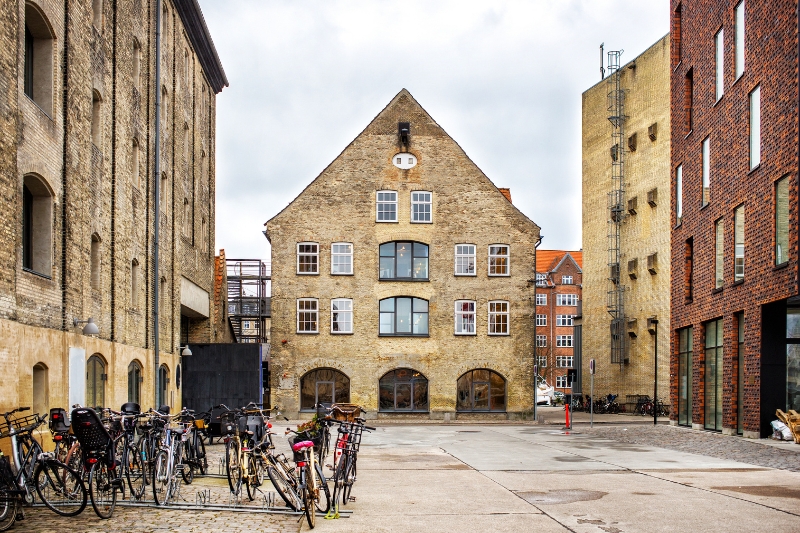
One of the most interesting ways to turn sustainability into a participatory experience is to design mechanisms that allow visitors to engage in a simple, visible, and positive way in caring for the destination. It is not only about encouraging responsible behavior, but about creating contexts that facilitate it, recognize it, and connect it with tangible benefits for the territory, the local community, and the travel experience itself.
In this sense, one of the most illustrative examples is Copenhagen Card, promoted by Wonderful Copenhagen, the official tourism organization of the Danish capital. Its approach is based on a simple but powerful idea: encouraging responsible behavior during the stay through benefits linked to specific actions.
The program operates on a trust-based participation model. The visitor carries out an action considered positive for the city, such as walking, cycling, or using public transport, participating in waste collection, or engaging in community activities; they then provide simple evidence of that action and, finally, access a reward offered by cultural venues, tourist attractions, hotels, restaurants, or other local partners.
Thus, actions such as arriving by public transport or bicycle, walking around the city, helping clean canals and parks, or participating in urban gardens can translate into benefits such as free tickets, museum discounts, cultural experiences, complimentary coffee, kayak rides, or gastronomic offers linked to local venues.
In this way, the incentive does not function only as a one-time reward, but as a way to make visible the relationship between visitor decisions and the destination’s sustainability objectives, especially during periods of higher tourism pressure, such as the summer months.
It is not surprising that such an initiative has emerged in a city like Copenhagen, recognized for its commitment to sustainable mobility, urban quality of life, and innovation in tourism management. Its canals, cultural spaces, urban design, and lifestyle linked to well-being provide an especially favorable context for exploring new relationships between visitors, sustainability, and the urban experience.
Beyond this specific case in Denmark, what matters is the approach. Sustainability ceases to be communicated only as an institutional or corporate commitment and becomes an active, understandable, and shared experience for travelers. From a tourism management perspective, initiatives like this help translate visitor responsibility into concrete actions that create value for the destination.
In a country like Spain, with a great diversity of tourism realities, the value of such models does not lie in replicating them literally, but in adapting their logic to the characteristics, needs, and objectives of each territory. In this regard, the international network of Biosphere destinations can facilitate the exchange of knowledge among territories seeking to integrate new forms of participation, shared responsibility, and sustainable management into their local reality. To achieve this, strong public-private collaboration is essential, capable of engaging administrations, companies, local communities, and visitors around shared goals.
The institutional sphere plays a particularly relevant role, especially at the local government level, where many of the most direct and operational tourism competencies reside. Municipalities, island councils, and provincial authorities can act as facilitators of these models, defining priorities, building partnerships, and ensuring that incentives respond to real destination challenges.
At the same time, the local business ecosystem is key to ensuring that these initiatives are viable, attractive, and sustainable over time. Their ability to integrate them into the tourism offering, communicate them effectively, and connect rewards with valuable products, services, and experiences can make the difference between an isolated action and a strategy with real impact.
Integrated into broader sustainable management strategies, these mechanisms can contribute to objectives such as reducing overcrowding, combating seasonality, strengthening the local economy, improving coexistence between tourism and residents, and enhancing the value of less visible cultural and natural resources.
However, for incentives for responsible behavior to generate a real positive contribution, they must be supported by clear governance, verifiable objectives, and indicators that allow their progress to be evaluated. Only in this way can they become a complementary tool for advancing toward sustainable, competitive, and resilient destinations, where sustainable tourism ceases to be a promise and becomes a shared, measurable practice oriented toward continuous improvement.

The future of sustainable tourism increasingly involves raising the sector’s level of ambition. It is no longer just about reducing impacts, but about moving toward models capable of generating tangible benefits for territories, communities, and ecosystems.
This transition requires strategic vision, management tools, collective commitment, and metrics capable of demonstrating the real value of the actions undertaken.
Along this path, certification can play a decisive role as a tool to organize, evaluate, and strengthen this process. Distinctions such as Biosphere Certified for companies and Biosphere Certified Destination for destinations, endorsed by the Responsible Tourism Institute (RTI), make it possible to translate commitments into action plans, indicators, and continuous improvements aligned with the United Nations Sustainable Development Goals (SDGs) and ESG criteria (Environmental, Social, and Governance).
This approach is reinforced through a broader ecosystem in which the Biosphere online sustainability management platform, the community of sustainable companies, and the international network of Biosphere destinations help facilitate management, visibility, collaboration, and shared learning among committed tourism stakeholders.
More than a recognition, this approach represents a way to support the sector in building more balanced, responsible, and future-ready sustainable destinations and tourism experiences. The key lies in ensuring that sustainability is not limited to a statement of intent, but is translated into management, evidence, continuous improvement, and a positive contribution to the territory.